Nursing Diagnosis and Nursing Intervention

Showing posts with label Gastritis. Show all posts

Nursing Diagnosis - Acute Pain related to Gastritis

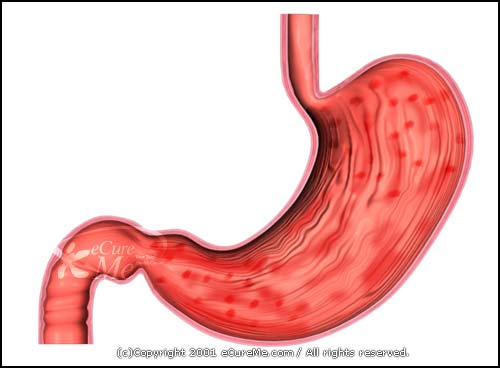
Gastritis is an inflammation of the lining of the stomach, and has many possible causes. Is a major cause of acute excessive alcohol consumption or prolonged use of nonsteroidal anti-inflammatory drugs such as aspirin or ibuprofen.

Sometimes gastritis develops after major surgery, traumatic injury, burns, or severe infections. Gastritis may also occur in those who have had weight loss surgery resulting in ribbon or reconstruction of the gastrointestinal tract.

Cause of chronic gastritis is infection with bacteria, primarily Helicobacter pylori''''. Certain diseases, such as pernicious anemia, chronic bile reflux, stress and certain autoimmune disorders can cause gastritis as well.

The most common symptom is abdominal upset or pain. Other symptoms are indigestion, flatulence, nausea, and vomiting.

Some people may have a feeling of fullness or burning in the upper abdomen. A gastroscopy, blood test, complete blood count tests, or stool tests can be used to diagnose gastritis. Treatment includes taking antacids or other medications, such as proton pump inhibitors or antibiotics, and avoiding hot or spicy foods. For those with pernicious anemia, B12 injections are given.

Nursing Diagnosis - Acute Pain related to Gastritis

Acute Pain related to inflammation of the mucosal lining of the stomach (gastric)

Goal:
  • Pain is reduced with no inflammation or irritation of the gastric mucosa.

Outcomes:
  • Pain scale is reduced
  • Do not feel pain in the epigastric
  • Not grimace (no abdominal tenderness)

Interventions:
  • Record complaints of pain, including the location, duration, intensity (scale of 0-10)
  • Review the factors that increase or decrease pain
  • Give food a little but often as an indication for patients
  • Assistive range of motion exercises active / passive
  • Provide frequent oral care and comfort measures (back massage, change of positions)
Collaboration:
  • Give medication as indicated

Rational:
  • Pain is not always there but if there is to be compared with the previous patient's symptoms of pain, which can help diagnose the etiology and occurrence of bleeding complications.
  • Assist in making the diagnosis and therapeutic needs.
  • Have the effect of neutralizing acidic foods, it also destroyed the womb gaster.Makan little gastrin prevent distension and output
  • Lowering joint stiffness, pain minimizing discomfort.
  • Bad breath because tertahanya oral secretions cause no appetite and can increase nausea. Gingivitis and dental problems can increase

Clinical Manifestations of Acute Gastritis and Chronic Gastritis

Clinical Manifestations of Acute Gastritis and Chronic Gastritis
Acute Gastritis and Chronic Gastritis

Clinical Manifestations of Acute Gastritis and Chronic Gastritis

Acute Gastritis

Acute Gastritis is very varied, ranging from very mild, asymptomatic, up to very heavy, which can lead to death. In the case of very heavy, very prominent symptoms are:
  1. Hematemetis and melena that can last a very great shock to occur due to blood loss.
  2. In most cases, symptoms are very mild and even asymptomatic. Complaints such as pain that arises in the gut, usually mild and can not be appointed to the appropriate location.
  3. Sometimes accompanied by nausea and vomiting.
  4. GI bleeding is often the only symptom.
  5. In the case of very light bleeding, manifests as occult blood in the stool and will be found in physical signs of deficiency anemia with no apparent etiology.
  6. On physical examination found no abnormalities except usually those with severe bleeding, causing signs and symptoms of hemodynamic disorders as real as hypotension, pallor, cold sweat, tachycardia until the disturbance of consciousness.
Chronic Gastritis
  1. Varied and unclear.
  2. Feeling of fullness, anorexia.
  3. Epigastric distress that is not real.
  4. Early satiety.

Pathophysiology of Chronic Gastritis

Pathophysiology of Chronic Gastritis
Chronic gastritis can be classified as type A or type B.

Type A (often referred to as autoimmune gastritis) resulting from changes in parietal cells, leading to atrophy and cell infiltration. It is associated with autoimmune diseases, such as pernicious anemia and occurs in the fundus or corpus of the stomach.

Type B (sometimes referred to as Helicobacter pylori, also known as H. pylori) is associated with the bacteria H. pylori, dietary factors such as heat or spicy drink, use drugs and alcohol, smoking or reflux of intestinal contents into the stomach. H. Pylori includes bacteria that are not acid resistant, but this kind of bacteria are able to secure himself in the mucosal lining of the stomach. The presence of this bacterium in gastric mucosa of the stomach lining causing weakening and brittle so that stomach acid can penetrate the layer. Thus both gastric acid and the bacteria causing wound or ulcer. The immune system will respond to bacterial infection H. Pylori by sending beads of leukocytes, killer T cells, and other infection-fighting. However, it is not able to fight infection H. The reason pylori can not penetrate the stomach lining. But also can not be removed so that the immune response continues to increase and grow. Polymorph die and release of superoxide radicals damaging compounds in the cells lining the stomach. Extra nutrients are sent to strengthen the leukocyte cells, but nutrition is also a source of nutrients for H. Pylori. Finally, the state of the damaged epithelium of the stomach, forming a superficial ulceration and can cause hemorrhage (bleeding). Within a few days gastritis and even peptic ulcers are formed.

Imbalanced Nutrition Less Than Body Requirements - Gastritis

Imbalanced Nutrition Less Than Body Requirements - Gastritis
Nursing Diagnosis Interventions Imbalanced Nutrition Less Than Body Requirements - Gastritis

Gastritis commonly refers to inflammation of the lining of the stomach, but the term is often used to cover a variety of symptoms resulting from stomach lining inflammation and symptoms of burning or discomfort. True gastritis comes in several forms and is diagnosed using a combination of tests. In the 1990s, scientists discovered that the main cause of true gastritis is infection from a bacterium called Helicobacter pylori (H. pylori).


Nursing Diagnosis for Gastritis: Imbalanced Nutrition Less Than Body Requirements

Expected outcomes are:
  • stable weight,
  • laboratory values​​: normal albumin,
  • no nausea and vomiting,
  • body weight within normal limits,
  • normal bowel sounds.

Nursing Interventions Imbalanced Nutrition Less Than Body Requirements - Gastritis:
  • assess food intake,
  • weight measured regularly,
  • provide oral care on a regular basis,
  • encourage clients to eat little but often,
  • provide food in warm,
  • auscultation of bowel sounds,
  • examine food preferences,
  • supervised laboratory tests such as hemoglobin, hematocrit, albumin.

Nursing Diagnosis Interventions for Risk for Fluid Volume Deficit - Gastritis

Nursing Diagnosis Interventions for Risk for Fluid Volume Deficit - Gastritis

Gastritis is an inflammation of the lining of the stomach, and has many possible causes. The main acute causes are excessive alcohol consumption or prolonged use of nonsteroidal anti-inflammatory drugs (also known as NSAIDs) such as aspirin or ibuprofen. Sometimes gastritis develops after major surgery, traumatic injury, burns, or severe infections. Gastritis may also occur in those who have had weight loss surgery resulting in the banding or reconstruction of the digestive tract. Chronic causes are infection with bacteria, primarily Helicobacter pylori, chronic bile reflux, stress and certain autoimmune disorders can cause gastritis as well. The most common symptom is abdominal upset or pain. Other symptoms are indigestion, abdominal bloating, nausea, and vomiting and pernicious anemia. Some may have a feeling of fullness or burning in the upper abdomen. A gastroscopy, blood test, complete blood count test, or a stool test may be used to diagnose gastritis. Treatment includes taking antacids or other medicines, such as proton pump inhibitors or antibiotics, and avoiding hot or spicy foods. For those with pernicious anemia, B12 injections are given.


Nursing Diagnosis for Gastritis : Risk for Fluid Volume Deficit


Objectives:
  • Risk for Fluid Volume Deficit does not happen.

Expected outcomes are:
  • mucous membranes moist,
  • good skin turgor,
  • electrolytes returned to normal,
  • pink capillary refill,
  • stable vital signs,
  • input and output balance.
Nursing Interventions Risk for Fluid Volume Deficit - Gastritis :
  • assess signs and symptoms of dehydration,
  • observation of vital signs,
  • measuring intake and output
  • encourage clients to drink about 1500-2500ml,
  • observation of skin and mucous membranes,
  • collaboration with physicians in the delivery of intravenous fluids.
Copyright © Nursing Diagnosis Intervention. All rights reserved. Template by CB | Published By Kaizen Template | GWFL | KThemes